“Definitely the best lawyer in the world! Extremely compassionate and highly professional. My son and I thank her from the bottom of our hearts for her help.”
Soraya C.


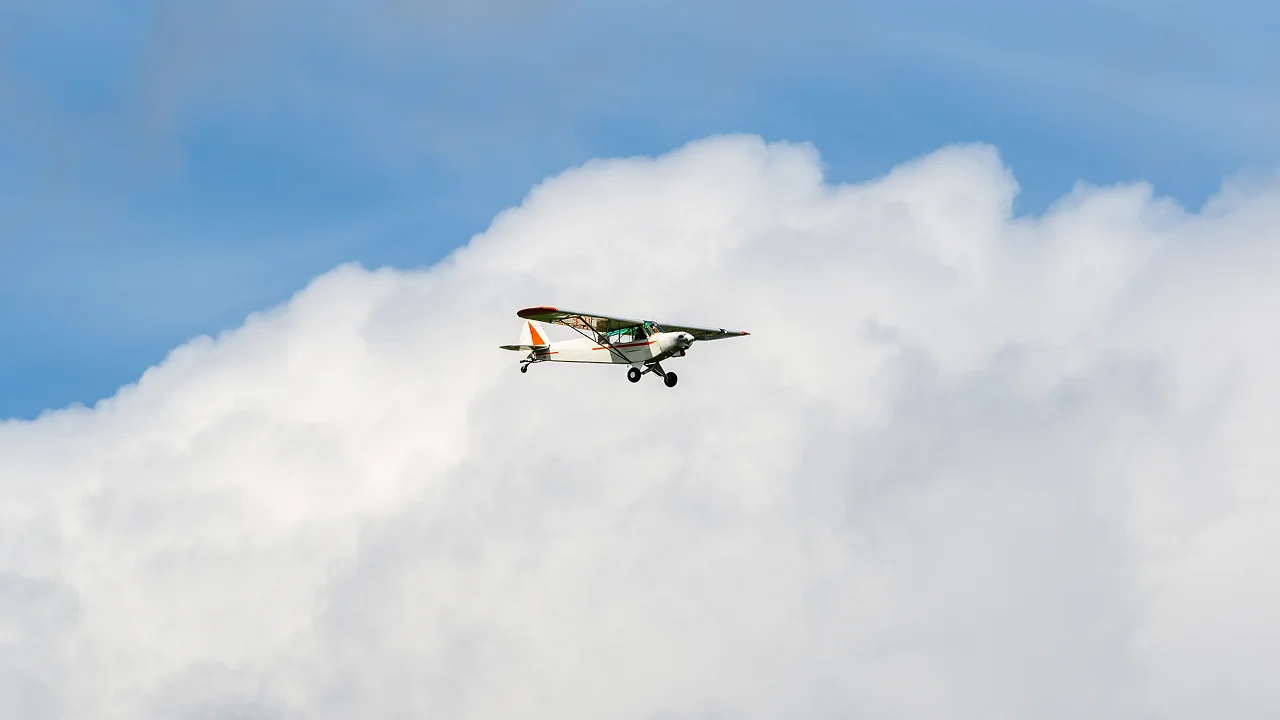
When aviation accidents happen, the consequences are often catastrophic. Victims and families are suddenly left dealing with severe injuries, financial strain, confusing investigations, and insurance companies that move fast to protect their own interests rather than the people harmed. Novo Law helps injured passengers and grieving families pursue accountability after plane crashes, helicopter accidents, charter flight incidents, and other aviation disasters across Florida.
Aviation cases are different from ordinary injury claims because they often involve multiple defendants, federal regulations, technical evidence, and powerful corporate or government interests. Novo Law understands that these cases require careful investigation and a legal team that is prepared to dig into maintenance records, flight data, pilot conduct, and manufacturer responsibility. If you need guidance after an aviation accident, call Novo Law at (954) 822-5198.
Florida aviation accident cases demand more than general personal injury experience. These claims require a firm that understands how to work through overlapping state law, federal aviation rules, and international treaty issues when necessary. Novo Law brings a hands-on approach to each case, with direct communication, bilingual support, and the determination to stand up to insurers, operators, and other responsible parties.
We understand the importance of clear communication for South Florida families. Many aviation incidents affect Spanish-speaking passengers, crew members, and family members who deserve explanations in the language they are most comfortable with.
At Novo Law, our bilingual attorneys are ready to help. If you or your family has been affected by an aviation crash anywhere in Florida, contact us at (954) 822-5198 for a consultation.
Novo Law has the resources to investigate claims thoroughly. We work with aviation experts to review maintenance records, flight data, pilot logs, and aircraft manufacturing details. Our team understands how to handle investigations with the National Transportation Safety Board (NTSB) and Federal Aviation Administration (FAA), coordinate with federal and state laws, and hold all responsible parties accountable. With the right legal resources and technical knowledge, we fight to secure the compensation victims and families deserve.
If your case involves complex aviation litigation, Novo Law is prepared to handle it. Contact us at (954) 822-5198 to discuss your aviation accident claim with a lawyer who understands the unique challenges of these cases.
In Florida, coastal conditions can make aviation incidents even more complicated. Birds, islands, heavy tourism, dense air traffic, and hurricane weather patterns can all play a role in flight safety and accident reconstruction. Our personal injury attorney can help to determine if the crash may have involved pilot decisions, airport conditions, weather planning, wildlife hazards, or maintenance failures that are not obvious at first glance. At Novo Law, we handle the following aviation-related accidents.
Commercial airline accidents often involve crashes, runway incidents, and in-flight emergencies governed by FAA Part 121 regulations for scheduled carriers. These cases often involve major airlines with powerful legal teams and complex insurance coverage.
Florida’s busy airports, including Miami International, Fort Lauderdale-Hollywood, and Orlando International, handle millions of passengers annually, increasing exposure to runway incursions and ground incidents. Novo Law has the resources to investigate commercial carrier negligence and hold airlines accountable for passenger injuries.
Private and general aviation accidents involve small planes, single-engine aircraft, and personal flight operations that fall under different regulatory standards than commercial carriers. These accidents frequently occur during training flights, recreational flying, or personal transportation across Florida’s numerous small airports.
The sunshine state has over 400 public and private airports, many in coastal areas where weather changes rapidly and bird strikes are common. Our team can help investigate maintenance records, pilot qualifications, and weather decision-making to identify negligence in general aviation cases.
Charter flight accidents involve on-demand air transportation that may operate under different FAA rules than scheduled commercial airlines. Florida’s tourism industry drives heavy charter traffic, especially for private jets heading to Miami, Fort Lauderdale, and Palm Beach for business or leisure.
Charter operators may cut corners on maintenance or pilot training to reduce costs, putting passengers at risk. Novo Law can help examine whether charter companies followed safety protocols and maintained their aircraft properly before the accident.
Helicopter crashes often involve news helicopters, tour operations, air ambulances, and private rotorcraft operating in Florida’s dense coastal airspace. Tour helicopters carrying visitors over Miami Beach, the Everglades, or the Keys face unique risks from heat, humidity, and sudden tropical storms.
Air ambulance helicopters transporting patients across South Florida must navigate heavy traffic and sometimes land in emergency conditions. Our firm investigates whether helicopter operators maintained proper safety standards and trained pilots for Florida’s challenging coastal flying environment.
Air tour and sightseeing accidents often involve flight operators carrying passengers over Florida’s most popular attractions, including beaches, the Everglades, and major tourist destinations. These flights operate in high-traffic areas with heavy bird activity, low-altitude flying, and frequent weather changes.
The FAA has increased scrutiny on air tour safety following several high-profile incidents in recent years. At Novo Law, we hold tour operators accountable when they fail to maintain aircraft or dispatch pilots without proper training for coastal conditions.
Seaplane and float plane accidents typically involve aircraft designed to land on water, which are popular for tours and transportation in our coastal communities and the Florida Keys. These aircraft face unique risks from water conditions, marine traffic, sudden storms, and bird strikes during takeoff and landing.
Florida’s warm coastal waters attract large bird populations that create significant strike hazards for seaplanes. Our team can investigate whether seaplane operators followed proper maintenance and safety procedures for water-based aviation operations.
Drone-related incidents are becoming more common as recreational and commercial drone use increases across Florida’s crowded airspace. Drones can collide with manned aircraft, interfere with emergency operations, or crash into people and property on the ground.
Florida’s popularity for tourism and filming makes it a hotspot for both commercial and recreational drone activity. Novo Law can help victims pursue claims in the event that drone operators fail to follow FAA regulations or operate negligently in congested areas.
Many aviation accidents are caused by more than one problem at the same time. Pilot error, mechanical failure, air traffic control mistakes, defective aircraft parts, poor maintenance, runway incursions, fuel mismanagement, design defects, and bad weather can all contribute to a crash or serious in-flight injury.
In a Florida aviation case, a passenger may have no ability to know what went wrong without access to records, technical analysis, and expert review. For example, a charter plane may appear to have crashed because of weather, but the deeper issue could be a maintenance oversight, improper flight planning, or a defective component. That is why Novo Law treats investigation as one of the most important parts of the case from day one.
Aviation crashes often cause devastating injuries because the force of impact, fire, smoke, or emergency landing conditions can be extreme. Victims may suffer burns, traumatic brain injuries, broken bones, spinal cord injuries, internal organ damage, deep lacerations, post-traumatic stress, or death. In the most severe cases, families must pursue wrongful death claims while also dealing with funeral expenses and the loss of financial and emotional support.
These cases are not just about the immediate injury. Long-term medical care, lost income, reduced earning capacity, permanent disability, and the emotional toll on surviving family members may all be part of the damages claim. Novo Law works to document the full impact of the accident so that insurers and defendants do not undervalue what the victim has lost.
Multiple parties may be responsible in a Florida aviation accident. Depending on the facts, liability may fall on a commercial airline or charter company, the pilot, an aircraft manufacturer, a parts supplier, a maintenance company, airport staff, ground crews, or even a government entity involved in air traffic control.
Florida law generally allows injured people to pursue compensation from every negligent party whose conduct contributed to the crash. That is important because aviation claims often involve layered fault. For example, a pilot may have made a bad decision during landing, but the aircraft may also have had a maintenance defect, or an airport crew may have failed to warn about a runway hazard. Novo Law investigates every possible source of liability so no responsible party slips away.
Aviation claims can involve both Florida law and federal aviation regulations, depending on the type of aircraft, the flight route, and the parties involved. The Role of the NTSB and FAA in Aviation Investigations
The NTSB investigates civil aviation accidents and many serious incidents, while the FAA regulates aviation safety and operations. Their findings can be important, but they do not automatically decide who pays compensation to the victim.
For many Florida personal injury claims, the statute of limitations is generally two years, while wrongful death claims are also generally subject to a two-year deadline under Florida law. Product liability claims can be affected by Florida’s 12-year statute of repose, which can bar claims after a product has been in circulation for that period. If a government entity is involved, notice requirements and shorter deadlines may apply, so aviation cases should be reviewed quickly.
Florida also uses modified comparative fault. That means compensation can be reduced by the injured person’s percentage of fault, and recovery is barred if the person is found more than 50 percent responsible in most negligence cases. For example, if a passenger ignored a clear safety instruction during a small aircraft emergency and that conduct contributed 20 percent to the harm, any recovery could be reduced by that percentage.
International flights may also trigger the Montreal Convention, which can impose special rules, a two-year filing deadline, and different liability standards for airline passenger claims. That makes it especially important to determine early whether the flight was domestic, international, commercial, or private.
Victims of aviation accidents may be able to recover medical expenses, future medical care, lost wages, reduced earning capacity, pain and suffering, disability-related losses, funeral costs, and wrongful death damages. In some cases, punitive damages may also be available if the facts support especially reckless conduct.
The right damages theory depends on the facts of the crash and the identity of the responsible parties. Novo Law works to build a claim that reflects the true scope of the harm, not just the initial hospital bill. Call Novo Law at (954) 822-5198 to discuss whether your aviation accident case may qualify for compensation.
Novo Law approaches aviation claims with a focus on evidence, experts, and accountability. That means reviewing maintenance logs, pilot records, flight data, witness statements, weather reports, airport records, and government findings. It also means identifying every potentially liable party and understanding how aviation insurance and corporate defense strategies work.
These cases often depend on fast action because critical evidence can disappear quickly. Wreckage may be moved, records may be disputed, and witnesses may become harder to locate as time passes. The sooner Novo Law is involved, the stronger the chance of preserving the proof needed to support your claim. If your family needs help after a plane crash or helicopter accident, contact Novo Law at (954) 822-5198
If you or someone you love was harmed in an aviation accident, do not wait to get help. These cases move quickly, and the earlier Novo Law gets involved, the better the chance of preserving evidence and building a strong claim.
Contact Novo Law today at (954) 822-5198 for a consultation. We are ready to help Florida families pursue answers, accountability, and compensation after an aviation accident.
If you were injured in an aviation incident, lost a loved one in a crash, or suffered harm because of a pilot, operator, maintenance provider, manufacturer, or airport-related failure, you may have a claim. The most important issue is whether someone’s negligence or a defective product contributed to the accident. Novo Law can review the facts and help determine whether a case exists.
The strongest evidence often includes flight data, maintenance records, pilot training logs, weather information, witness statements, medical records, and any federal investigation materials. In aviation cases, small pieces of technical evidence can make a major difference in proving what went wrong. That is why evidence preservation should begin immediately after the incident.
In Florida, many aviation-related injury claims are subject to a two-year deadline, while some claims may involve different rules depending on whether they are wrongful death, product liability, government-related, or international flight claims. The exact deadline can change based on the facts, so waiting to get legal advice can put the claim at risk. Early review is especially important in aviation matters because multiple legal systems may apply.
Yes. Florida’s comparative fault rules can reduce compensation if the injured person is partly responsible, and a recovery may be barred if fault exceeds 50 percent in most negligence cases. In an aviation setting, that could matter if a passenger ignored safety instructions, interfered with crew directions, or failed to follow a required procedure during a small aircraft or training flight.
Yes. Helicopter crashes are included in aviation accident claims, and they often involve additional issues such as sightseeing operations, charter services, medical transport, or coastal flight hazards. Florida families injured in helicopter incidents may still have a path to compensation depending on the cause and the parties involved.
Possibly. Bad weather does not automatically excuse negligence, especially if a pilot, operator, or flight service provider failed to plan properly, used unsafe judgment, or ignored known conditions. In Florida, weather-related aviation incidents often require a deeper look at training, route decisions, airport conditions, and operational protocols.
